




Diesel Particulate Filters
Detroit Diesel's Chuck Blake offers an interesting perspective on diesel particulate filters. He says he owns them, even though every truck owner who has purchased a Detroit engine on every 2008 model-year Freightliner product has paid for them
Detroit Diesel's Chuck Blake offers an interesting perspective on diesel particulate filters. He says he owns them, even though every truck owner who has purchased a Detroit engine on every 2008 model-year Freightliner product has paid for them.
And if you think about the EPA regulations on emissions warranties, he's right. Any emissions component that doesn't go to the 435,000 minimum mileage that the manufacturer must warrant has to be replaced at no cost to the customer.
So Blake, who is the field service engineer for Detroit Diesel and a major contributor to ATA's Technology and Maintenance Council on engine topics, does all he can to educate customers on the right way to handle and maintain "his" filters.
When it comes to handling a component that can cost $5,000 if damaged, it pays to pay attention. So the workshop on diesel particulate filter maintenance - co-presented by Blake with Kevin Otto of Cummins, Brent Cluskey of Caterpillar and Vince Lindley of Volvo - at last fall's TMC meeting in Nashville was standing room only.
The DPF
Every truck manufactured with a 2007 and later diesel engine is equipped with a diesel particulate filter. In the coming years, every truck in California (and in those states that follow California's lead) will also have to have a DPF, retrofitted to comply with California's mandate to reduce particulate emissions. And they do clean up particulate matter, or PM. The filters trap the microscopic carbon, cleaning up the exhaust to the point where a clean handkerchief placed over the exhaust remains completely clean and doesn't even smell of diesel exhaust.
The carbon trapped in the filter burns off in the excess air and nitrogen monoxide in the exhaust when the stream is hot enough. This depends on duty cycle - a truck running up and down hills has enough heat to regenerate the filter passively. But there are many trucks running lighter duty cycles where the regeneration requires a little help: an active regeneration, where injected diesel fuel heats up the filter. Either way, the carbon is removed as gaseous carbon dioxide.
But other combustion products, notably the ash from the engine lube oil, are not regenerated, and build up in the filter. This eventually causes a rise in backpressure in the exhaust, which affects engine performance, economy and durability.
This is the point at which the filter must be serviced.
There are different service procedures according to the manufacturers of the engine/filter combination.
One thing all the engine makers agree on, though: You don't want the technician removing it from the truck and banging it on the shop floor to clear out accumulated ash. That would be bad for two reasons: one, you wouldn't want your shop staff exposed to its fine particles; two, bang the delicate filter on the floor, and you'll break it.
Problems With Filters
In addition to the buildup of ash, there can be other problems with DPFs. The presenters at the TMC session mentioned some that are mostly a result of the mechanical failure. This could be of the filter element or, as it is more correctly described, the ceramic monolith. It is one piece of ceramic (hence the term "monolith") that must retain its integrity so the diesel exhaust passes only through the fine-filtering walls of the ceramic material. If it is cracked, through poor handling by the technician, through vibration, or because the driver has bashed the DPF driving across railroad tracks, it will allow diesel particulates into the downstream side of the filter. When tearing down to service the filter, if any black deposits are found on the downstream side of the filter, this indicates the monolith is bad and must be replaced.
The other premature failure is through an engine problem, usually a turbo failure that allows lube oil into the filter matrix, or a leaky injector that loads it with raw fuel. Both block the through-the-wall flow of exhaust and produce a sudden rise in backpressure.
Barring any sort of engine problem, however, you're unlikely to see any of this before the filter has become restricted by ash and needs to be serviced, maybe as much as 400,000 to 500,000 miles down the road.
Ash: The Enemy
There has been significant discussion over the use of the latest CJ-4 oils, notably during sessions at recent TMC meetings. Many fleets are determined to keep using the earlier formulation of CI-4+ created for the 2004 engines. This is usually because they have a large number of pre-2007 trucks in the fleet and don't want different lubes and the confusion that generates in the shop. Since CJ-4 is usually more expensive as well, a wholesale switch to the latest spec involves a big expense, even though it is backwards compatible with earlier engines.
It remains a fact that the latest formulation is specifically designed to lower the levels of ash and prevent DPF plugging at lower miles. But you can see the argument, especially in fleets where the trucks are traded early and a fleet can run the cheaper lube and still get away with no DPF service, trading them in before ash buildup becomes critical.
Another issue is the amount of sulfur in the fuel. Since late 2006, most on-highway fueling locations provide ultra-low sulfur fuel, with less than 15 ppm rather than the previous 500 ppm sulfur, to protect the DPF and any precious-metal catalysts on the surface of the ceramic. It is generally believed that one or two fuel loads of the higher sulfur fuel will not do any serious harm to the filter, but more could cause a reduced life for the element.
For over-the-road trucks, DPF service is predicted to be anything from 150,000 to 300,000 miles at the earliest. In cleaning, the filter element is returned to about 95 percent of its as-new capacity, so the filter is not a high-maintenance component. But if it is not handled properly - read damaged - it is a very expensive component to replace.
Servicing the Unit
Most systems are designed to be quick and easy to service. But there are different service requirements. Volvo, Mack and Cummins all use the FleetGuard systems that require an air blast cleaning in a purpose-made cabinet. Detroit Diesel says its DPF is best cleaned with de-ionized water, although recent service bulletins have announced it allows air-blast cleaning as well. Caterpillar has a vacuum-cleaner-like device that doesn't require disassembling the filter system, though some Cat dealers also offer air-pulse cleaning off the truck using a Caterpillar/SPX-developed cleaning machine.
In most cases the filters are designed to be easy to access, requiring simple hand tools and a jack rather like a transmission jack for the low-mounted teakettle type DPFs found on Volvo and Mack trucks. Peterbilts and Kenworths have low-mounted cylindrical DPFs, but there are also stack-mounted units. All are heavy enough to require some support as they are serviced.
In most designs, the filter housing is held together with easily removed bands so the filter assembly can be separated and a new filter installed in 30 minutes to an hour. The actual cleaning process on the air blast cleaning machine takes only around 20 to 45 minutes, and the general recommendation is that cleaning can be accommodated during an oil change.
A special case that calls for filter cleansing is contamination by engine lubricant or unburned fuel, which may occur in a turbocharger or injector failure. In some of the pre-2007 testing, we heard of fleets that were presented with difficulties in getting the expensive monoliths cleaned of the gooey lube oil that had been dumped into the filter. One fleet said it boiled the filter in Woolite until no more of the oil was released - a long and labor-intensive process with safety implications. Ed Saxman, the powertrain guru at Volvo, maintains the filter must be baked in a chamber such as the Donaldson Thermal Regenerator. Donald
More Maintenance

Why Fleet Data Matters More Than Ever at Waste Connections [Watch]
Waste Connections' Chuck Palmer explains how telematics, predictive maintenance, safety analytics, and AI help keep vehicles on the road and drivers safe in this episode of HDT Talks Trucking.
Read More →
How to Prevent Summer Truck Cooling System Failures
Summer heat puts heavy-duty truck cooling systems under intense strain. Learn how preventive maintenance and accurate repair information can help reduce downtime.
Read More →
Deadline Extended for HDT Truck Fleet Innovators Nominations
Heavy Duty Trucking has extended the deadline for nominations for its Truck Fleet Innovators awards. The deadline has been extended to May 22.
Read More →
Why VMRS Is the Natural Link Between AI, Predictive Analytics, and Vehicle Repairs [Commentary]
Jon White was a leading figure in the development of VMRS. Now, after five decades of service, White says VMRS is becoming essential to the AI-driven future of truck maintenance.
Read More →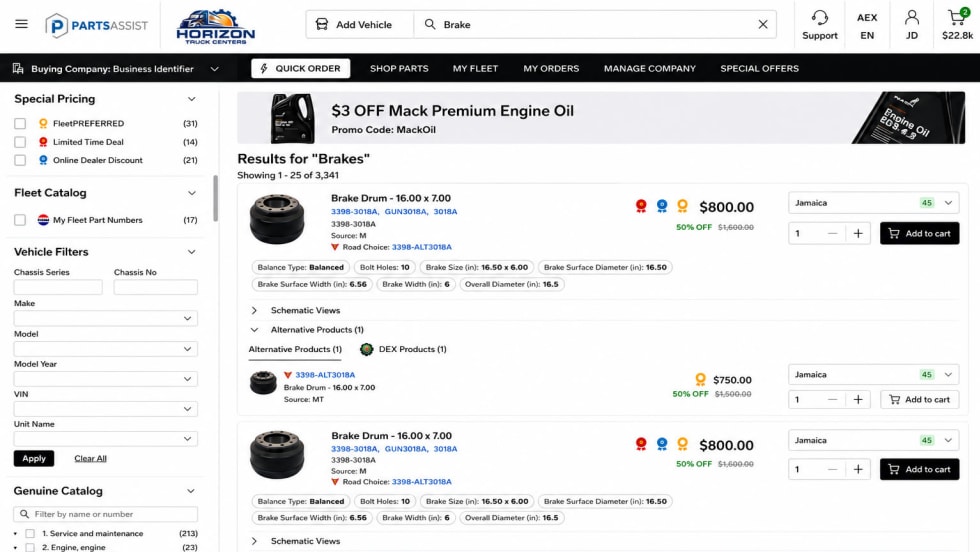
Mack Trucks Revamps PartsASIST Platform with Faster Performance, Improved Navigation
Mack Trucks has launched a redesigned version of its PartsASIST online ordering platform, adding faster search, real-time inventory visibility and enhanced order tracking.
Read More →
International Debuts ‘My International’ Connected Platform to Centralize Fleet Data, Service, and Dealer Communication
International’s New digital ecosystem unifies telematics, maintenance, and dealer interaction into a single interface, aiming to reduce downtime and deliver predictive fleet insights.
Read More →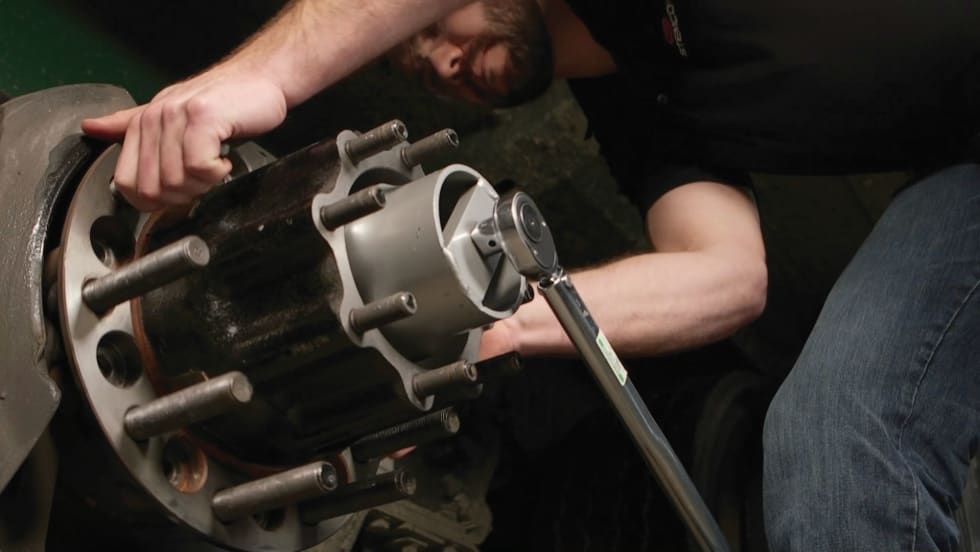
Saving Fuel at the Wheel End
Wheel ends are often overlooked in the quest for better fuel economy. But Joshua Kucera, product manager, Stemco, warns that neglecting wheel ends can reduce fuel economy and increase maintenance headaches.
Read More →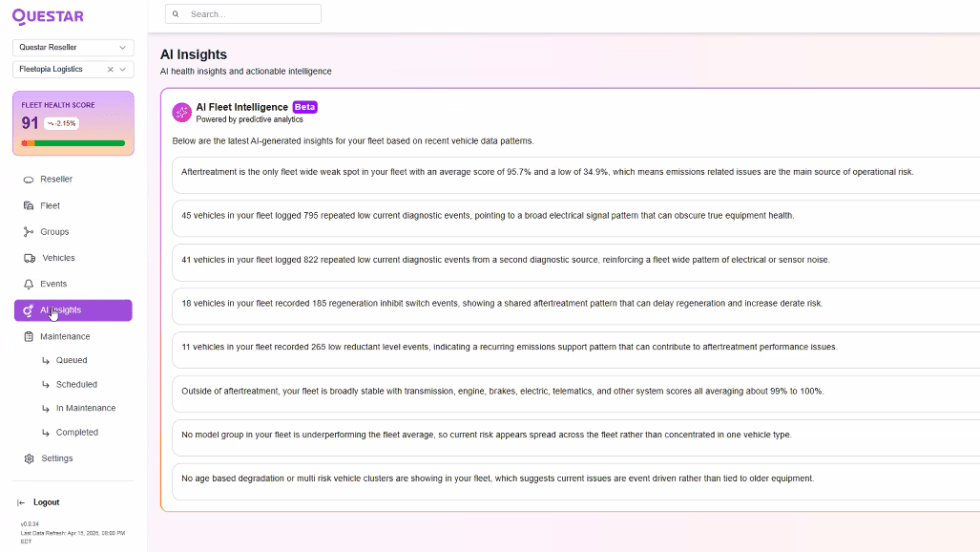
Beyond Predictive: Questar Adds AI-Driven Repair Recommendations to Fleet Maintenance
Questar’s latest maintenance platform uses AI to flag potential failures, recommend repairs, and estimate the cost of waiting, helping fleets prioritize maintenance and save money and downtime.
Read More →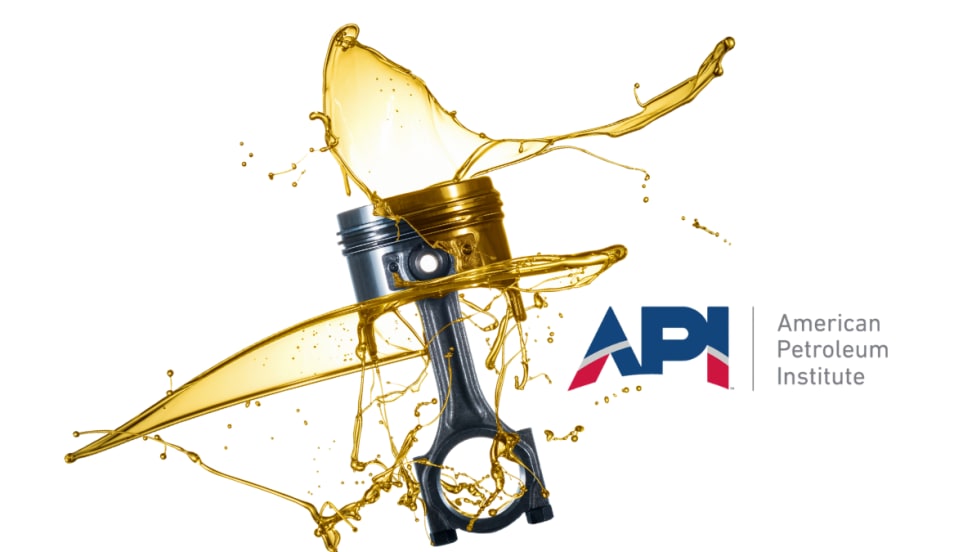
API Formally Approves Next-Gen Engine Oil Category for 2027 Engines
Heavy-duty engine oil marketers can begin finalizing formulations and preparing product packaging to meet the new oil specifications ahead of the January 1 licensing date.
Read More →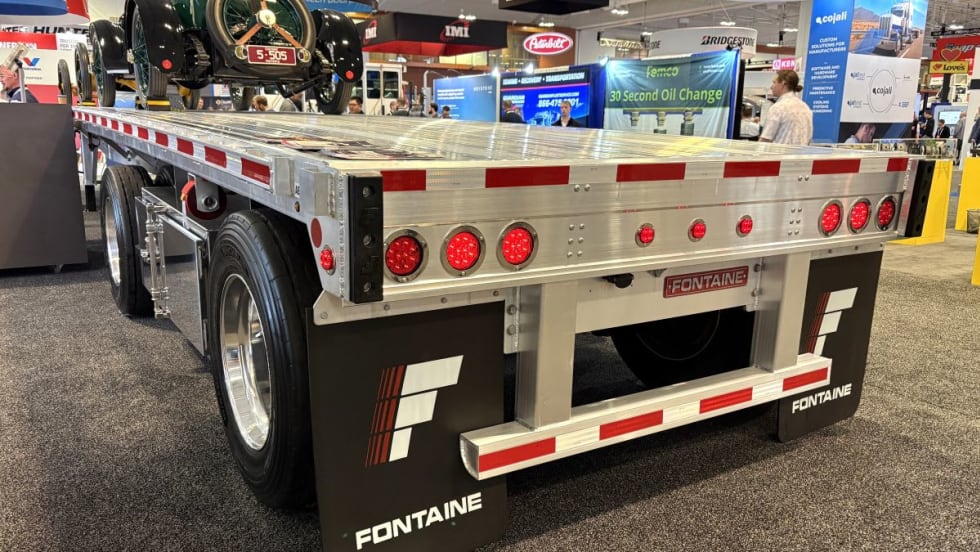
Fontaine Expands Flatbed Lineup with New Fleet-Focused Models, Eyes 2027 Launch
Fontaine is broadening its flatbed lineup with new models aimed at fleets, including a lightweight aluminum trailer expected in 2027 that emphasizes durability, repairability, and lower cost.
Read More →