





Related: Knowing Isn't Fixing
When Safety Comes From the Top
For J&M Tank Lines, safety technology is simply a tool in its quest to make sure drivers get home safely.
March 27, 2017
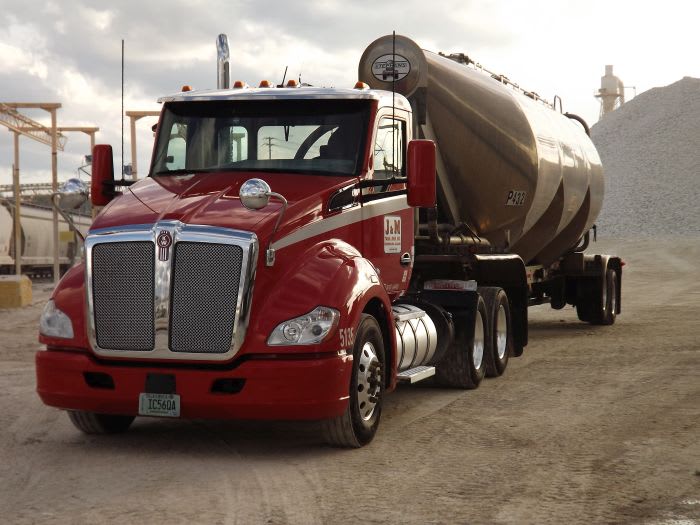
J&M operates 13 terminals in Alabama, Georgia, Oklahoma, South Carolina, and Texas. The fleet specializes in carrying industrial and food grade products, as well as liquid bulk goods. Photo: Bendix
4 min to read
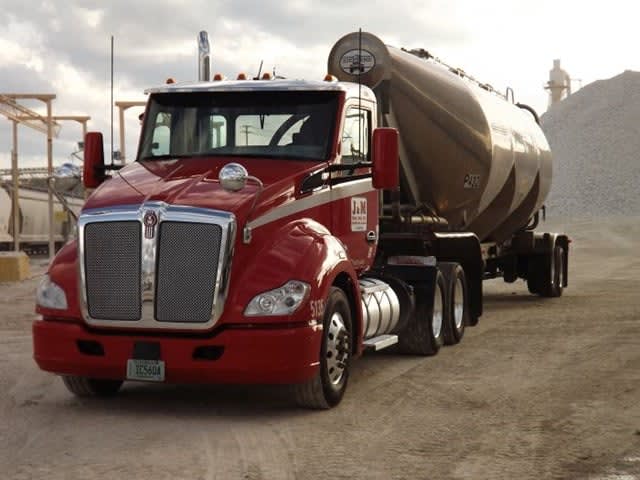
J&M operates 13 terminals in Alabama, Georgia, Oklahoma, South Carolina, and Texas. The fleet specializes in carrying industrial and food grade products, as well as liquid bulk goods.Photo: Bendix
These days there’s a lot of emphasis on high-tech safety systems such as collision mitigation, but Randy Watson is a firm believer that safety at any trucking company starts at the top.
“I’ve been doing this since 1987, and I’m a firm believer that regardless of how fancy the technology and how much money you spend, no safety program is any better or worse than the ownership allows it to be. Everyone talks the talk, but few walk the walk.”
At J&M Tank Lines, where Watson is vice president of safety, CEO Harold Sumerford Jr. does walk the walk.
“Our number one customer could call Harold and say, ‘I need this load covered and was told no,’ and if we don’t have a driver who can legally do it, we won’t budge,” Watson says. “That permeates throughout the company. The culture is so strong, I’ve had dispatchers come to me and rat their own drivers out because they were trying to run hot.”
Go to J&M Tank Lines’ website, and right there on the home page it says, “Safety First.” The nearly-400-unit tanker fleet, which is headquartered in Birmingham, Alabama, but also has operations in Texas and Georgia, was named Grand Champion of the 2016 Georgia Fleet Safety Awards by the Georgia Motor Trucking Association.
“Safety takes a backseat to nothing, and that starts with Harold,” Watson explains. “Then it’s incumbent on the rest of us to figure out what are we going to do to make sure we’re doing it right. What are our well-thought-out policies, checks and balances, how do we convey this message to all our employees. The number one message is, you get back home to the people who love you, period. And that’s what drives me.”
Unlike some carriers, where safety, operations, and maintenance may operate in silos or even be in conflict with one another, at J&M the heads of all three areas work as a team.
“This is what I’ve been searching for all my life, to do safety the way it’s meant to be done.”
Using safety tools
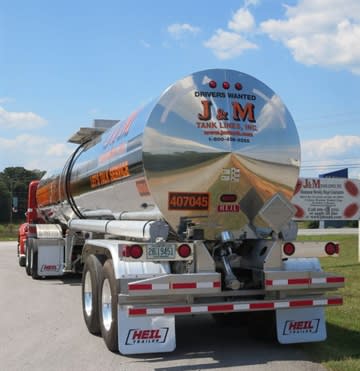
J&M’s fleet includes some 700 trailers — mostly pneumatic tanks, but also a number of liquid tanks and about a dozen flatbeds.Photo: Deborah Lockridge
Part of the safety culture does involve investing in equipment and tools that help the company reach its safety goals, including electronic logs to track driver hours of service, and air disc brakes on all axles.
“Harold realizes, unlike some other people, that everything doesn’t have to show ROI in black and white on a piece of paper,” Watson says. “That sometimes it’s hard to measure the intangibles on your accounting form.”
J&M uses a wide array of onboard safety technology, including a full suite of Bendix products, such as electronic stability, Bendix Wingman Advanced and more recently the new Wingman Fusion collision mitigation systems, AutoVue lane departure warning and BlindSpotter side object detection system.
But key to getting the most value out of those technologies, Watson says, is following up on what they show you. J&M uses Bendix’s SafetyDirect web portal to analyze the data coming from the Bendix safety systems. An onboard telematics system automatically transmits real-time driver performance data and event-based information to the fleet’s back office, including recorded video taken from the AutoVue camera. The resulting reports help the fleet develop more targeted driver support, reward, and training programs
“We have good drivers; sometimes they just have bad habits,” Watson says. The key is identifying those habits and coaching drivers. The Bendix system, he says, “is the most proactive tool I’ve ever had in identifying them and act on them before [drivers] get in situations where someone gets hurt.”
One longtime driver, he says, was surprised to learn that he had unwittingly been following too close for years and promised to do better. “Six weeks later he was in a situation where he avoided an accident.”
Watson emphasizes that he doesn’t use the videos “to just nail the driver to the wall,” but instead brings a driver in and shows him the video and uses it to prompt a discussion of what happened and how the company can help the driver to improve. At the same time, he says, he uses the videos to identify drivers exhibiting good habits in a situation that triggered the camera and reward them with recognition and gift cards. The videos are also used in safety meetings, where they have more impact than generic training videos, Watson says, because “this is the driver sitting beside you.”
Watson personally views all the videos that are sent when triggered by the system. He says he gets about five to 10 per day. Some are not triggered by driver error, but from other vehicles pulling out in front of them. A common trigger is too much G force when a driver takes a curve a little too fast, which presents a coaching opportunity. And he looks for patterns of behavior, and combines the data coming from the safety system with other information such as motorists calling in to complain.
“We preach that these systems are not as good as the human brain and the human eye — at the end of the day they are mitigation systems, not prevention systems,” Watson says. Drivers are told, “You’re the driver and you have to be on top of your game.”
Subscribe to Our Newsletter
More Safety & Compliance
Truck Snow Removal: Fines Aren't the Only Risk
Delaware and Maryland are the latest states to add requirements and fines for snow and ice removal on commercial trucks. But a flying-ice accident could cost a fleet more than a citation.
How ATA Wants to Fix ELD Certification
ATA's new roadmap calls for independent ELD certification, better fraud detection and closer oversight of providers. Here's how the proposed system would work.

Daimler, Paccar Recall Trucks Over Driveline Defect
Nearly 4,900 Freightliner, Western Star, and Kenworth trucks are being recalled because a missing snap ring could allow the driveline to separate from the truck.
133 ELDs Revoked as ATA Pushes Certification Reform
FMCSA just removed a record number of electronic logging devices from its registry. ATA says it's time to rethink how ELDs get approved in the first place.

CVSA Sets 2027 International Roadcheck Dates
The annual 72-hour truck inspection blitz will take place May 11–13 across North America. Here's what fleets can expect and what inspectors found during the 2026 event.

FMCSA’s New Complaint Platform Makes It Easier to Report Trucking Safety Concerns
The FMCSA Complaint Center features expanded complaint categories and a name change away from the word "consumer."

FDA Eases Path for Oral-Fluid Testing
Federal actions could advance oral-fluid drug testing for truck drivers, but lab certification delays and marijuana rescheduling questions remain.
Kodiak Lines Up Fleets for Driverless Trucking
An agreement for 75 trucks, a new Texas freight lane, and progress on safety validation move Kodiak closer to its planned driverless highway launch.

More Trailer Data Through the Same Seven-Way [Video]
Can trucking’s standard seven-way connector handle more cameras and trailer data? Grote’s Adam Slade shows HDT how the company is using new technology with its 4See trailer system, not only to add a new backup camera but also to expand other capabilities — without adding another connection.

PrePass Intelligence Mines Fleet Bypass, Toll and Safety Data
PrePass Intelligence helps fleets measure bypass savings, flag potential toll overcharges, and spot suspicious transactions by combining data from separate systems.