




Related: Truck Technology Is Global and Local
Commentary: Europe is Different
What are the differences between trucks and trucking in North America versus Europe? Try to drive a long-nose conventional on roads that were conceived in the year 1403.
by Rolf Lockwood
December 16, 2016
Rolf Lockwood
3 min to read

Rolf Lockwood
What are the differences between trucks and trucking in North America versus Europe? Our trucks have become increasingly similar, but there are limits.
I’ve been flying across the pond for decades and I’ve written stories about trucks and engines and the highest of electronic technologies. I’ve done dozens of plant tours, spent many hours on test tracks, and driven quite a few miles on roads both urban and rural.
Once, after driving north from Stockholm, across the Arctic Circle, and then down the length of Finland, I even got lost in downtown Helsinki while piloting a Volvo Globetrotter with a full trailer behind. Long before the days of GPS.
In a nutshell, the differences between here and there are countless, yet there are also similarities. Trucking is trucking in some senses, no matter where you are, and nowadays technology walks across the water in both directions every day.
My very first transAtlantic trucking trip was to Finland in the winter of 1985, and it illustrated the wandering technology point a lot earlier than you’d expect. Hosted by Nokia, I was the lone journalist amongst a group of tire dealers. The company set me up to drive with a logger in the boonies outside the city of Tampere. Great! Told that he drove a made-in-Finland Sisu cabover, I was excited to try it out.
Imagine my surprise when I found a Cummins 400 under my right foot and a Fuller 13 in my right hand! I wanted something far more exotic. Still, those 8 hours going from forest to mill plus a truckstop lunch in the middle – with a driver who spoke no English and a meal I couldn’t identify – were fascinating. Among the lessons: Drivers are drivers and, despite a distinctly Finnish configuration in that Sisu, trucks are trucks.
Except they’re really not. I’ve learned that people are drawn to the truck-driving thing over there for much the same reasons as here: a simple love of driving and the feeling of independence you get as you grip the wheel and stare at the open road. But even then, and certainly now, European drivers are subject to much stricter rules than we are, and mostly they drive many fewer hours.
Then there’s the cabover thing. Invisible here, dominant there. Narrow, twisty European roads have much to do with it – try driving a long-nose conventional through a small town in Belgium, for example, on roads that were conceived in the year 1403. A key reason why cabovers work better there.
There are still folks on this side who ask why we can’t bring those big, tall COE tractors across the pond. It will never happen, if only because cabover aerodynamics are inferior to those of our svelte conventionals, and fuel economy seems to matter more here than there.
I pursued this topic at a recent dinner in Germany with Daimler’s two top engineering executives on the powertrain side, Frank Reintjes and Elmar Boeckenhoff, along with Kary Schaefer, general manager of marketing and strategy for Freightliner and Detroit, herself an engineer. I made them laugh in a big way when I asked them to discuss what makes the two markets different.
How long have you got, they chimed, almost in unison … that’s a doctoral thesis.
Subscribe to Our Newsletter
More Equipment

More Trailer Data Through the Same Seven-Way [Video]
Can trucking’s standard seven-way connector handle more cameras and trailer data? Grote’s Adam Slade shows HDT how the company is using new technology with its 4See trailer system, not only to add a new backup camera but also to expand other capabilities — without adding another connection.
Read More →
Grote: More Cameras, Same Seven-Way Connector
The next-generation 4See rear-view backup camera from Grote uses the standard seven-way connector and supports additional cameras and other trailer data.
Read More →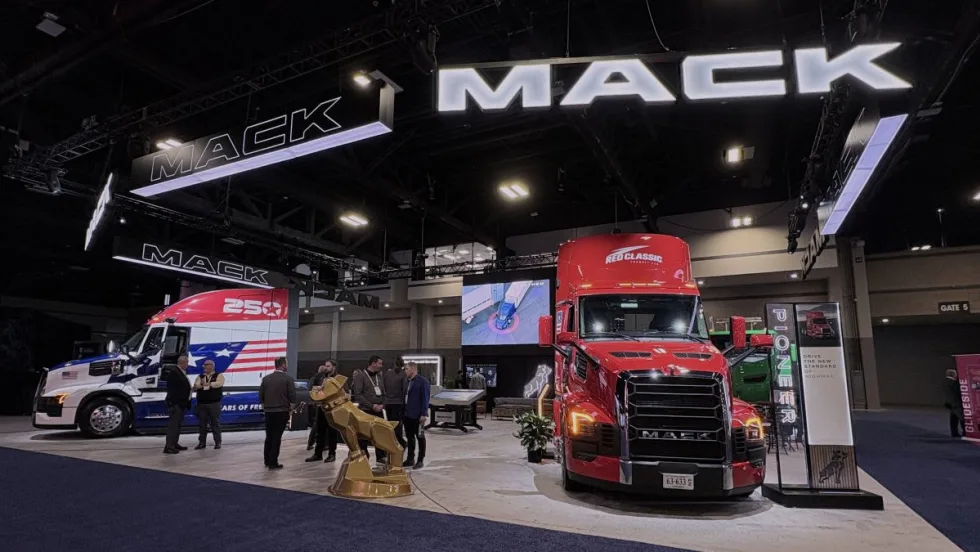
Trucks at ATA's 2026 MC&E in Charlotte, North Carolina [Photos]
From rigs decked out in patriotic America's 250 paint schemes to autonomous trucks and more, check out these photos from ATA's 2026 Management Conference & Exhibition.
Read More →
Help HDT Find Trucking’s Top Products
Have you come across a new product that could make a difference for trucking fleets? Nominate it for HDT’s 2027 Top 20 Products Awards by November 9.
Read More →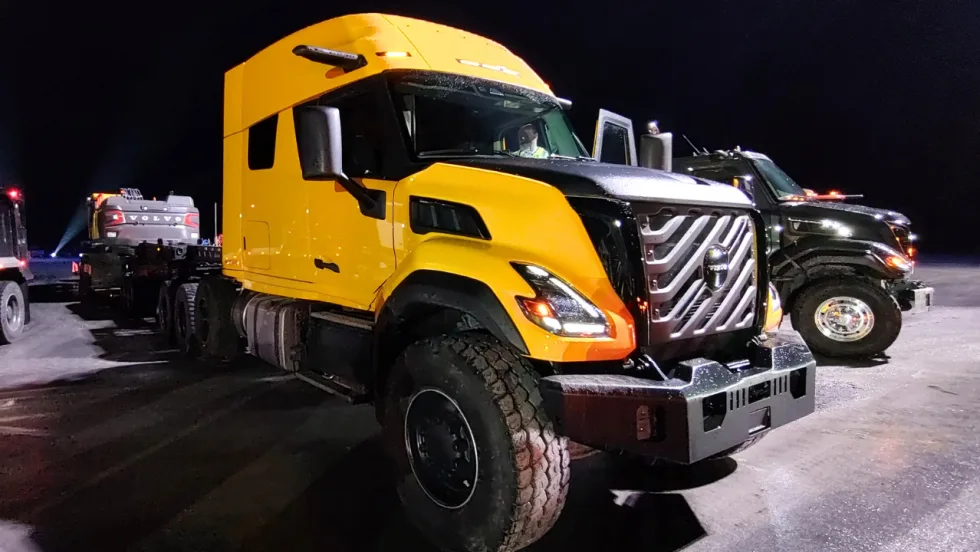
Volvo Unveils New VNX Heavy-Haul and Vocational Truck
Volvo Trucks has launched the VNX, a new vocational truck also available as a tractor in day cab and two sleeper configurations, with one heavy-haul model. The Volvo VNX is powered by Volvo's D13 platform, which delivers up to 540 horsepower and 1,950 pound-feet of torque and is EPA 2027-compliant.
Read More →
How GP Transco Cuts Trucking Fuel Costs, a Tenth of a Gallon at a Time
What’s another tenth of a mile per gallon worth? GP Transco shares how equipment upgrades and driver coaching turn small gains into meaningful fuel savings.
Read More →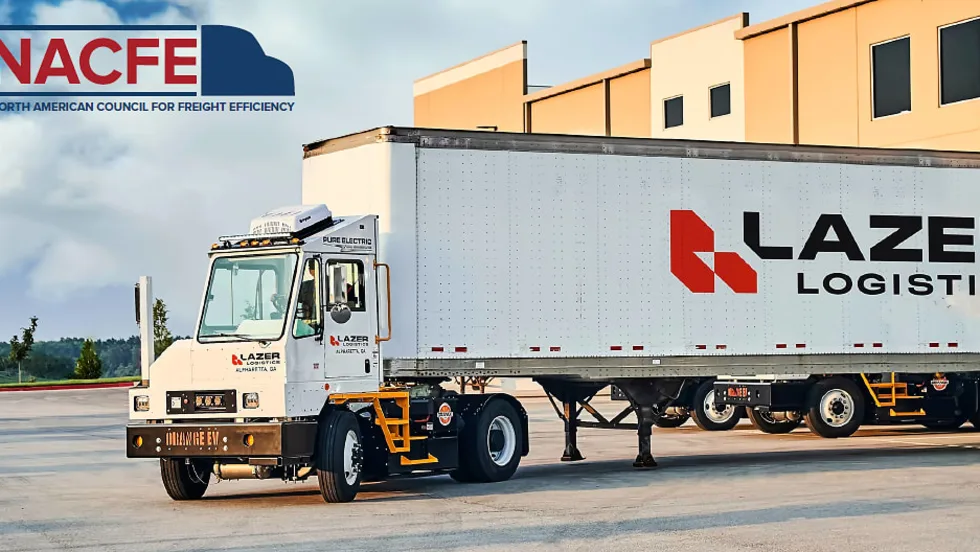
Electric Yard Tractors Move Beyond Pilots
Operating-cost savings have overtaken sustainability goals as the leading reason surveyed fleets are adopting battery-electric terminal tractors, according to new NACFE research.
Read More →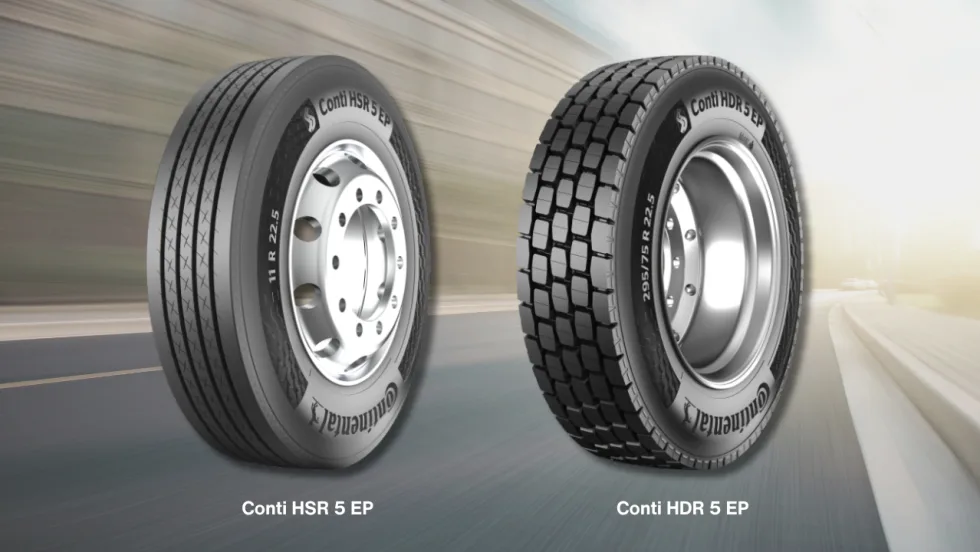
Continental Introduces New Regional Truck Tires
Continental says its new Generation 5 steer and drive tires for regional operations offer longer tread life, with estimated mileage gains of 22% and 19%, respectively.
Read More →
Tekmodo Introduces CargoBright Brand for Translucent Trailer Roofs
CargoBright is designed to diffuse daylight across the cargo area while performing as a working vehicle roof.
Read More →
Fleet Economics Shape Electric Truck Outlook
ACT Research expects costs, charging infrastructure, and technology improvements to drive zero-emission commercial vehicle adoption as federal regulations and incentives retreat.
Read More →