





Since President Trump announced that English would be the official language of the United States early in his second term, a number of trucking organizations and legislators have been pushing to tighten enforcement of federal regulations requiring commercial truck drivers to speak English.
Trump Wants Crackdown on Non-English-Speaking Truck Drivers
Roadside inspection officials will be instructed to more strictly enforce a federal regulation requiring commercial drivers to be able to speak English under a new executive order from President Trump.
April 28, 2025
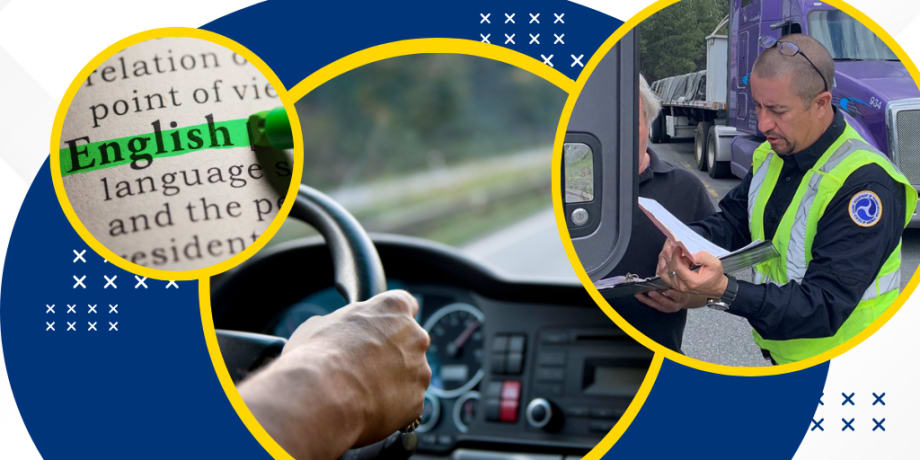
The Trump administration is tightening up enforcement of federal regulations requiring truck driver English language proficiency.
Image: HDT Graphic
7 min to read
In a new executive order signed April 28, "Enforcing Commonsense Rules of the Road for America's Truck Drivers," President Trump directed the Federal Motor Carrier Safety Administration to rescind a 2016 FMCSA guidance on enforcement of English language proficiency requirements for truck drivers and replace it within 60 days.
"Proficiency in English... should be a non-negotiable safety requirement for professional drivers," Trump said in the executive order.
"They should be able to read and understand traffic signs, communicate with traffic safety, border patrol, agricultural checkpoints, and cargo weight-limit station officers. Drivers need to provide feedback to their employers and customers and receive related directions in English. This is common sense."
Transportation Secretary Sean Duffy quickly announced that the department would be taking action on the executive order.
"Federal law is clear, a driver who cannot sufficiently read or speak English — our national language — and understand road signs is unqualified to drive a commercial motor vehicle in America. This commonsense standard should have never been abandoned," Duffy said in a release.
What the Regulations Say About Truck Drivers and English Proficiency
Although many news reports on Trump's expected executive order said it was “requiring truck drivers to speak English,” in fact, as Duffy pointed out, English proficiency for truck drivers is already a part of the Federal Motor Carrier Safety Regulations.
According to those regulations, to drive a commercial motor vehicle in interstate commerce, drivers must be able to speak and read English satisfactorily to:
Converse with the general public.
Understand traffic signs and signals.
Respond to official questions.
Make legible entries on reports and records.
What the executive order takes aim at is actually an Obama-era memorandum directing law enforcement officials to not put non-English-speaking truckers out of service.
The EO instructs the agency to rescind that guidance document titled and issue new guidance to FMCSA and enforcement personnel outlining revised inspection procedures, including "to ensure that the out-of-service criteria are revised such that a violation of the English language proficiency requirement results in the driver being placed out-of-service, including by working with the relevant entities responsible for establishing the out-of-service criteria."
Trucking groups as diverse as the American Trucking Associations and the Owner-Operator Independent Drivers Association have called on the federal government to update the policy.
Rep. Harriet Hageman from Wyoming recently wrote U.S. Transportation Secretary Sean Duffy to review this requirement.
The Republican congresswoman said that under the 2016 memo, “Formal driver interviews to confirm ELP would ... no longer be conducted during roadside inspections'" and "that ‘If the driver cannot read, write or speak English but can communicate sufficiently with the inspector/investigator, they should not be cited with an ELP violation. Tools to facilitate communications, including interpreters, cue cards, smartphone applications, etc. may be used when interacting with drivers.'”
According to Duffy, FMCSA has documented cases where drivers’ inability to read signs and speak the English language may have contributed to a series of fatal accidents.
"In 2019, a semi-truck driver traveling down a crowded highway at almost 100 mph blew past several signs that warned of steep grades and dangerous curves," he said. "The driver ultimately hit multiple vehicles in a fatal crash, killing four and injuring others.
"In January this year, a fatal collision in West Virginia involved a driver fleeing another accident who required an interpreter for the post-crash investigation."
Trucking's Reaction
The transportation attorneys at Scopelitis, Garvin, Light, Hanson & Feary pointed out that "the EO does not address the specific information that motor carriers and their drivers must provide to satisfy this requirement or how FMCSA staff and enforcement personnel will assess a driver’s compliance.”
Before the 2016 change in enforcement policy, the FMCSA had provided tools to FMCSA staff and enforcement personnel to evaluate a driver’s English proficiency, the attorneys noted in an email alert.
The Owner-Operator Independent Drivers Association praised the executive order.
“OOIDA and the 150,000 truckers we proudly represent strongly support President Trump’s decision to resume enforcement of English proficiency requirements for commercial drivers,” said OOIDA President Todd Spencer.
“Basic English skills are essential for reading critical road signs, understanding emergency instructions, and interacting with law enforcement. Road signs save lives — but only when they’re understood. That’s why OOIDA petitioned the Commercial Vehicle Safety Alliance earlier this year to reinstate English proficiency as an out-of-service violation. Today’s announcement is a welcome step toward restoring a common-sense safety standard.”
According to published reports, Kevin Hawley, president and CEO of the Wyoming Trucking Association, said there is broad support among his membership to rescind the 2016 memo – but he also cautioned that a sudden change could have unintended consequences, according to published reports.
“A sudden policy shift could have ripple effects on the supply chain. If safety is truly our priority, then we need to continue this conversation with care and urgency.”
CVSA and Out of Service Criteria
The new executive order mandates revising out-of-service criteria to ensure drivers violating English proficiency rules are placed out-of-service.
Although FMCSA writes and enforces motor carrier safety regulations, it’s the Commercial Vehicle Safety Alliance that annually publishes out-of-service criteria.
According to the OOIDA publication Land Line, in 2015, CVSA had petitioned to remove the English language proficiency standard from the Federal Motor Carrier Safety Regulations, a request that was denied.
Doug Morris, OOIDA security operations director at the time, said that English language proficiency, at the time part of CVSA’s out of service criteria, resulted in 101,280 violations in 2014, but only 4,036 of those drivers were placed out of service.
At the meeting Morris was reporting on, CVSA members voted to no longer put English proficiency violators out of service, in spite of FMCSA retaining the regulation on the books.
Notably, this was before the FMCSA interpretation memo was published in 2016.
According to the Washington Post, federal inspection data shows about 2,200 violations of the language requirement between January and March, a fraction of the 1.2 million truck safety violations during that time.
How Dangerous is Lack of English Language Proficiency Among Truck Drivers?
"When looking at available data, it is well within reason to conclude that this guidance has played a factor in the number of trucking accidents throughout the last several years," Hageman wrote.
Those who want stricter enforcement of English proficiency requirements can point to examples of drivers without English language proficiency being involved in horrific crashes.
One example was the crash in Colorado in 2019 that Duffy referred to, when a truck driver killed four after apparently losing control coming down the steep grade between the Eisenhower Tunnel on Interstate 70 and the city of Lakewood, Colorado, smashing into a line of cars in a deadly, fiery crash.
The driver's company had on its record two citations related to its drivers' ability to speak and understand English, and according to public reports, the driver needed an interpreter during his police debriefing.
On the other hand, the company also had a number of brake-related citations on its record. And the driver was from Houston, Texas, and regardless of his language ability, probably did not have a great deal of training in mountain driving.
Despite tragic stories such as this that make headlines, overall, crash data points to causal factors such as truck driver fatigue, speeding, poor decision-making, and inattention more than language deficiencies.
Non-Domiciled CDLs
Duffy will also be tasked with evaluating protocols for the authenticity verification of commercial driver’s licenses (CDLs).
According to OOIDA, FMCSA issued regulatory guidance in 2019 that created a loophole for states to issue more "non-domiciled CDLs." Last month the group testified to Congress that the association was hearing growing concerns about the prevalence of drivers using these licenses.
Trump's executive order calls on the FMCSA to review non-domiciled commercial driver’s licenses (CDLs) issued by relevant state agencies to identify any unusual patterns or numbers or other irregularities, and to evaluate and take appropriate actions to improve the effectiveness of current protocols for verifying the authenticity and validity of both domestic and international commercial driving credentials.
In addition, the EO directs the Secretary of Transportation to, within 60 days, “identify and begin carrying out additional administrative, regulatory, or enforcement actions to improve the working conditions of America’s truck drivers.” This is a broad, open-ended directive that will have to be monitored.
In addition, a short section called "Supporting America’s Truck Drivers" instructs the transportation secretary to "identify and begin carrying out additional administrative, regulatory, or enforcement actions to improve the working conditions of America’s truck drivers," within 60 days.
"This is a broad, open-ended directive that will have to be monitored," said the Scopelitis attorneys.
More Safety & Compliance

Aperia Expands Halo Platform with Steer-Tire Inflation System, Fifth-Wheel Integration
Aperia Technologies introduced a new automatic tire inflation system for steer axles and a partnership with Fontaine Fifth Wheel to integrate coupling status into its Halo Connect platform.
Read More →
Fleetworthy and HAAS Alert Expand Partnership Stopped Truck Protection Alerts
Fleetworthy and HAAS Alert expanded their partnership to deliver real-time digital alerts that warn motorists when commercial trucks are stopped roadside and notify truck drivers when approaching emergency responders.
Read More →
New Entrants, Chameleon Carriers, and Safety: Is It Too Easy to Start a Trucking Company?
More than 100,000 new trucking companies enter the industry each year, but regulators manage to audit only a fraction of them. That churn creates opportunities for inexperienced startups — and for “chameleon carriers” that shut down after safety violations and reappear under new identities. Read more from Deborah Lockridge in this commentary.
Read More →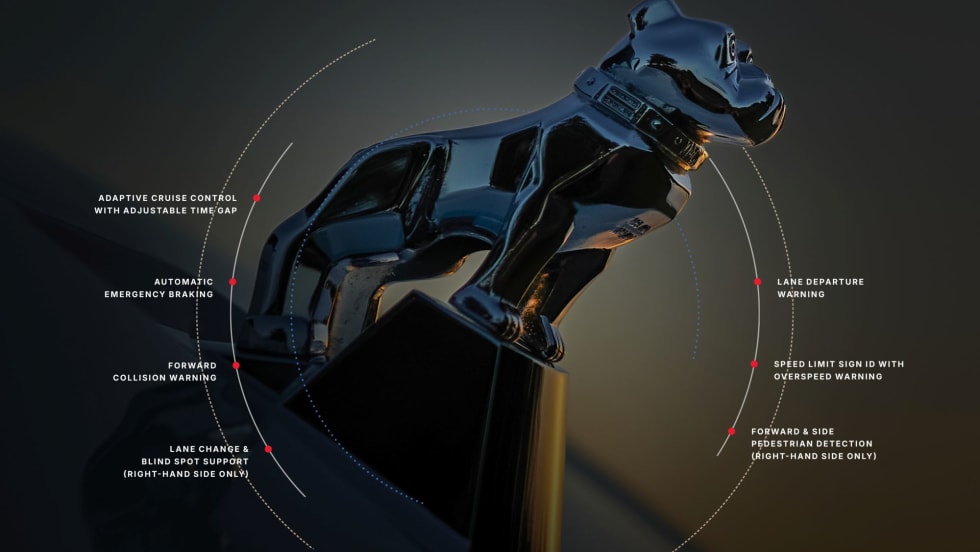
Mack Introduces Mack Protect Collision Mitigation System for MD Series
Mack Trucks has expanded its proprietary Mack Protect collision mitigation platform to the Mack MD Series, bringing heavy-duty safety technology to medium-duty trucks operating in urban and regional environments.
Read More →
Smarter Maintenance Strategies to Keep Trucks Rolling
In today’s cost-conscious market, fleets are finding new ways to get more value from every truck on the road. See how smarter maintenance strategies can boost uptime, control costs and drive stronger long-term returns.
Read More →
Bison Transport, Mill Creek Motor Freight Win TCA Fleet Safety Awards Grand Prize
Two Canadian fleets earned the Grand Prize in the Truckload Carriers Association’s 2025 Fleet Safety Awards, recognizing the industry’s top safety performance based on accident frequency and safety programs.
Read More →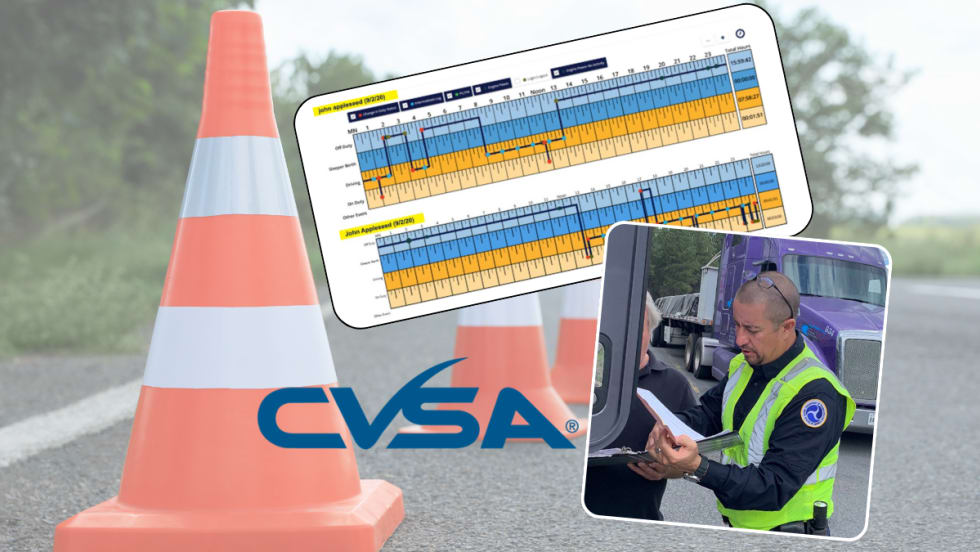
CVSA Issues New Inspection Guidance on ELD Tampering, False Logs
New guidance for commercial vehicle inspectors distinguishes between more traditional logbook violations and tampered ELD data that can result in mandatory 10-hour out-of-service orders.
Read More →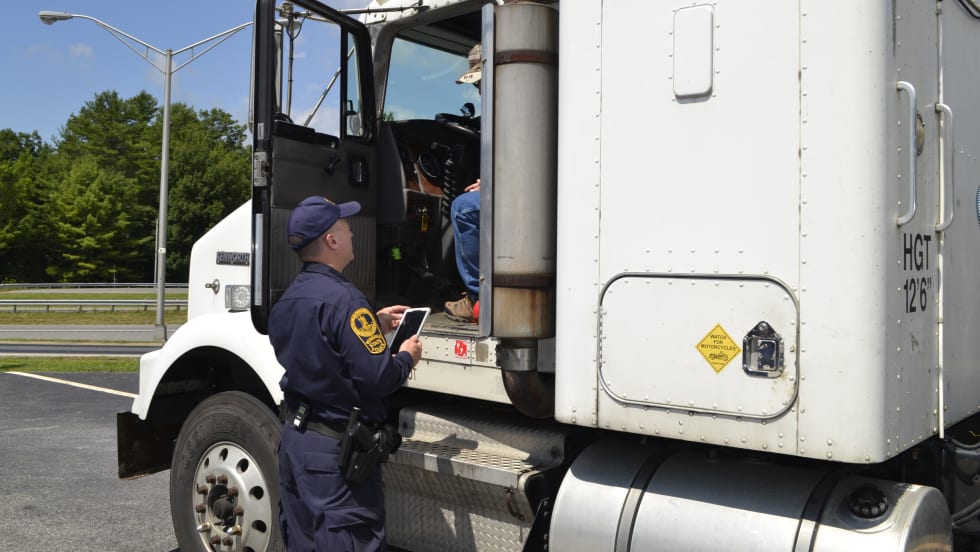
FMCSA Reinstates Field Warrior ELD to Registered Device List
One electronic logging device has been reinstated to the FMCSA's list of registered ELDs.
Read More →
Daimler Truck North America Adds 360-Degree Exterior Camera System to Vocational, Medium-Duty Trucks
Daimler’s new factory-installed system integrates side and forward-facing cameras with in-cab touchscreen to improve jobsite visibility and reduce upfit complexity.
Read More →
Kodiak Integrates HAAS Alert’s Safety Cloud into Autonomous Trucking Platform
Kodiak has integrated HAAS Alert’s Safety Cloud platform into its autonomous vehicle control system to send real-time digital hazard alerts to nearby motorists.
Read More →